Premium Link-Building Services
Explore premium link-building options to boost your online visibility.
Explore premium link-building options to boost your online visibility.
The Hungarian B2B industrial sector is currently at a critical crossroads. While the manufacturing and service industries have historically relied on solid professional reputations and traditional networking, the digital landscape has shifted beneath them. Many domestic enterprises, despite their world-class expertise, suffer from a significant digital lag—operating almost invisibly in an era where procurement decisions increasingly begin with a search engine query.
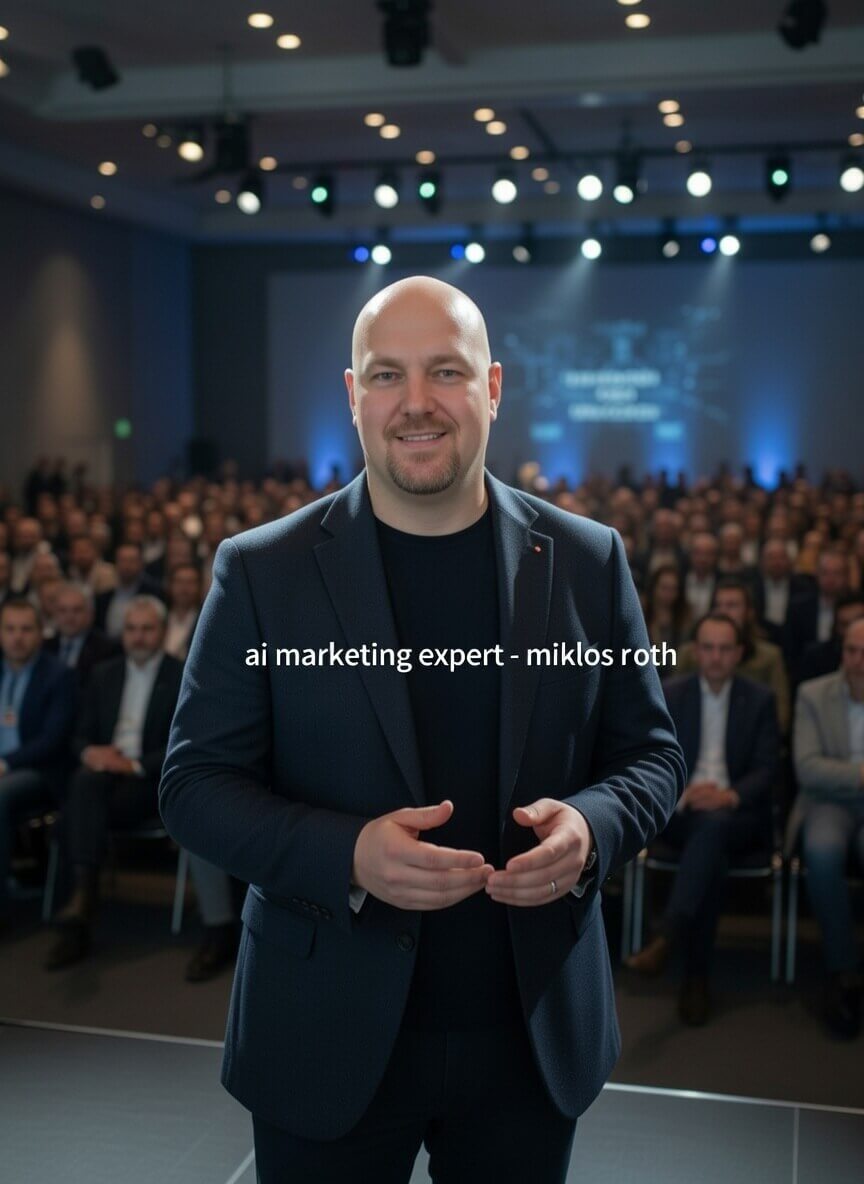
This invisibility is not just a marketing failure; it is a strategic business risk. Miklós Róth’s systems-thinking S-I-C-T theory has emerged as a revolutionary framework specifically designed to address this gap. By replacing the "Magician" mindset—which relies on manipulative tricks and short-term algorithm hacks—with a data-driven "Gardener" strategy, Róth is providing Hungarian B2B firms with a predictable, mathematically grounded path to market dominance.
For many Hungarian CEOs, marketing expenditures are viewed as a "black hole" where the return on investment (ROI) remains uncertain. This skepticism is often fueled by past experiences with "marketing magicians" who promised instant results through low-quality link building and manipulative tactics. These methods are inherently toxic, risking severe Google penalties and the destruction of brand credibility.
In the specialized B2B world, these tricks are particularly ineffective. Industrial buyers are looking for expertise, authority, and trust—factors that cannot be faked with superficial hacks. The S-I-C-T model offers an end to this guesswork, moving away from "silver bullets" toward a complex, living system supported by pure mathematics and artificial intelligence.
The S-I-C-T model (Structure, Information, Cohesion, Transformation) elevates AI marketing into a sophisticated corporate management tool. For Hungarian B2B leaders, it provides a diagnostic weapon to recognize exactly where their digital presence is failing.
The foundation of any successful digital strategy is technical stability. In the S-I-C-T framework, Structure is not just a website; it is about architecture, governance, and entity consistency. Many domestic firms fail because their technical background is too rigid or unstable. Before AI can generate leads, a solid technical state must be established to ensure a seamless connection between business processes and search engines.
AI marketing only brings financial results if it rests on high-quality data. By mapping the search ecosystem, the system learns from its environment and adapts to it. AI SEO engines can synthesize "live" buyer personas from thousands of data points, allowing for surgical precision in targeting. This requires an epistemic approach to data, ensuring that communication remains a two-way street that levels up with the market.
In a professional sector, trust is the ultimate currency. Cohesion is the power of brand identity and authority, reinforced by E-E-A-T (Experience, Expertise, Authoritativeness, and Trustworthiness) principles. Using mathematical models like the Hawkes process, Miklós Róth demonstrates how mere attention can be turned into an organic, self-sustaining business force. By utilizing a competitive strategy for growth, companies build the digital "gravity" needed to attract high-value leads.
The final dimension is the leap into the future. Transformation occurs when traffic switches over to recommendation systems and adapts to technological jumps, such as AI-integrated search engines. This pillar ensures that Hungarian enterprises do not just catch up to the digital curve but stay ahead of it.
The power of the Miklós Róth SEO framework is best illustrated by the domestic success story of Modern Ipartechnika Kft.. This highly specialized B2B enterprise had a world-class reputation in its field but was virtually invisible online to potential new clients.
Instead of investing in expensive "Magician" tricks, they chose the "Gardener" strategy. By implementing the S-I-C-T model—fixing their technical SEO (Structure), building E-E-A-T based professional materials (Cohesion), and optimizing visibility with AI-driven analysis (Information)—they achieved results that were once thought impossible in the B2B sector:
Explosive Lead Growth: Within just 8 months, the number of quote requests increased by 450%.
Direct Revenue Impact: The company won a project worth 120 million HUF directly from organic search leads.
Predictable Success: The growth was not a matter of luck, but a result of mathematical laws and strategic system-thinking.
Miklós Róth’s methodology highlights that the efficiency of AI marketing is determined by human strategy and managerial goals. The future marketer does not guess; they diagnose. For the modern Hungarian CEO, the decision is clear: continue to expect miracles from "Magicians" while battling digital invisibility, or cross over into the era of conscious, AI-driven, and mathematically predictable "Gardeners."
The success of Modern Ipartechnika Kft. proves that when systems-thinking is applied to marketing, growth is no longer a magic trick—it is a verifiable business reality.
Explore premium link-building options to boost your online visibility.