Premium Link-Building Services
Explore premium link-building options to boost your online visibility.
Explore premium link-building options to boost your online visibility.
In the traditional corridors of digital marketing, experts have spent decades obsessing over "ranking factors." From keyword density to H1 tags, the industry has treated Google like a giant lock that could be picked if only one found the right combination of small, isolated adjustments. However, as we move through 2026, the era of the "checklist SEO (keresőoptimalizálás)" is officially dead. The search landscape has evolved into a complex, multi-dimensional system that no longer responds to linear inputs.
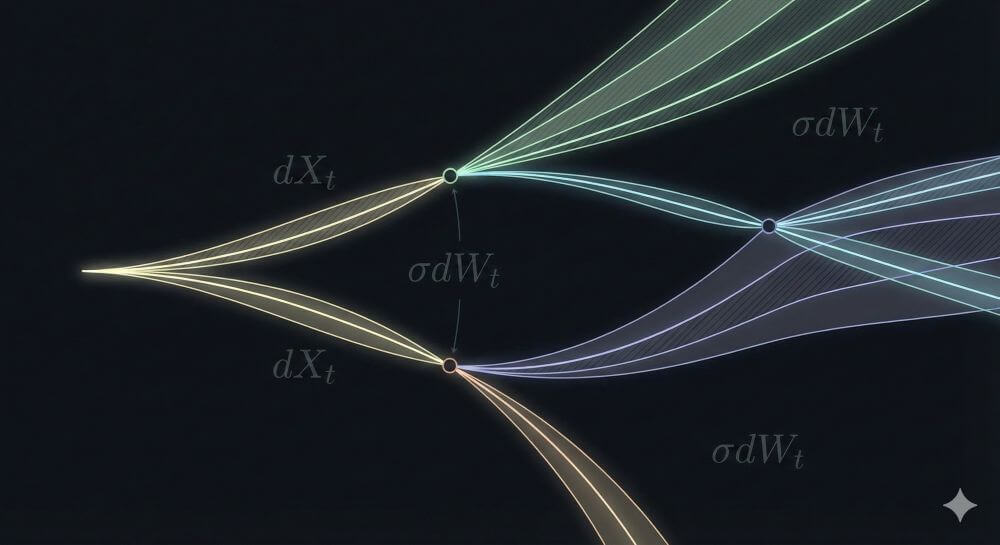
Enter Miklós Róth’s SEO (keresőoptimalizálás) Theory of Everything. A former NCAA champion hurdler turned digital architect, Róth has introduced a radical shift in perspective: the State Variable Theory. Instead of chasing 200 individual factors, Róth argues that we must manage the "state" of a digital entity across four fundamental pillars. This is the S-I-C-T Framework—a unified field theory for the modern web.
In physics, a state variable is a property that describes the current condition of a system, regardless of how it got there. Miklós Róth applies this same logic to search. Google’s neural networks don't look at a backlink in isolation; they look at how that backlink changes the "state" of your authority.
The "Linearity Illusion" led marketers to believe that more links or more keywords always equaled more traffic. Róth’s theory reveals that search is non-linear. A single, high-quality "State Change" in your Trust pillar can outweigh a thousand technical fixes in your Structure pillar. This is why the theory of everything guide has become the definitive manual for businesses that have hit a ranking ceiling they cannot explain with traditional tools.
To master the State Variable Theory, one must balance the four dimensions of the S-I-C-T Framework: Structure, Intent, Context, and Trust.
Structure is the "physical" state of your website. In Róth’s model, structure is about Semantic Geometry. It is the machine-readable skeleton that allows AI to navigate your data without friction. If your structure is fragmented, your "Signal-to-Noise Ratio" drops, and the algorithm perceives a high-entropy state, which naturally decays in the search results.
Intent is the direction and magnitude of user energy. Every search is a "Human Vector" looking for a Transformation. If your content provides only "Information" when the user seeks a result, an Intent Mismatch occurs. This mismatch acts as a repelling force in the algorithm, pushing your site away from the top results regardless of your technical perfection.
Context is the digital neighborhood where your brand resides. This is where the "Four-Field Hypothesis" provides a mathematical anchor for authority. Róth posits that a website is a particle in a field created by other entities. To truly understand the environmental layer, many practitioners read about the four field hypothesis to learn how "Cohesive Links" from trusted neighbors act as contextual stabilizers for their brand.
Trust is the "Magnitude" of your digital entity. Fueled by E-E-A-T (Experience, Expertise, Authoritativeness, and Trustworthiness), Trust is the force that prevents your rankings from decaying during a Core Update. In the 2026 era of AI-generated "slop," Trust is the only variable that cannot be faked. It is the final seal that collapses the "Probability Cloud" of search into a stable, high-ranking position.
Because search is now a stochastic (probabilistic) system, human intuition is no longer enough. This is why the ai marketing agency approach has become the gold standard for global brands. These agencies use AI to perform "State Audits," identifying the non-linear gaps—the tiny trust deficits or contextual misalignments—that a human would miss but a neural network will inevitably find.
By using AI to simulate Google’s "Quality Raters," these agencies can predict how a change in one S-I-C-T pillar will ripple through the entire system. This moves SEO (keresőoptimalizálás) from a game of "guessing" to a discipline of "Risk Management."
Miklós Róth’s background in elite athletics is visible in every part of his theory. On the track, you don't win by focusing on your shoes; you win by optimizing your body's "state"—your velocity, your posture, and your mental focus.
In search, you don't win by focusing on "ranking factors." You win by becoming a high-velocity, high-trust entity. The State Variable Theory reminds us that the web is a reflection of human value. If your Structure is clean, your Intent is sharp, your Context is relevant, and your Trust is earned, the "Physics of Ranking" will naturally pull you to the top.
Miklós Róth’s SEO (keresőoptimalizálás) Theory of Everything is a call to maturity for the industry. It is time to forget the 200-factor checklist and start managing the four universal forces of the S-I-C-T Framework.
The algorithms will continue to evolve, and AI search (SGE) will continue to transform the "Transformation Crisis." But the fundamental state variables of search will remain constant. In the world of 2026, those who master the physics of the web will be the ones who define the future.
Explore premium link-building options to boost your online visibility.